
Table Of Content
Table of Contents
Your wooden furniture may seem pristine when it is freshly finished, only to develop a dull patch here, a rough edge there, or an uneven sheen after a few months. This is because factors like humidity, moisture and everyday use affect how a finish looks and performs.
It is easy to blame the final coat. But the real problem can start much earlier, with what went underneath it.
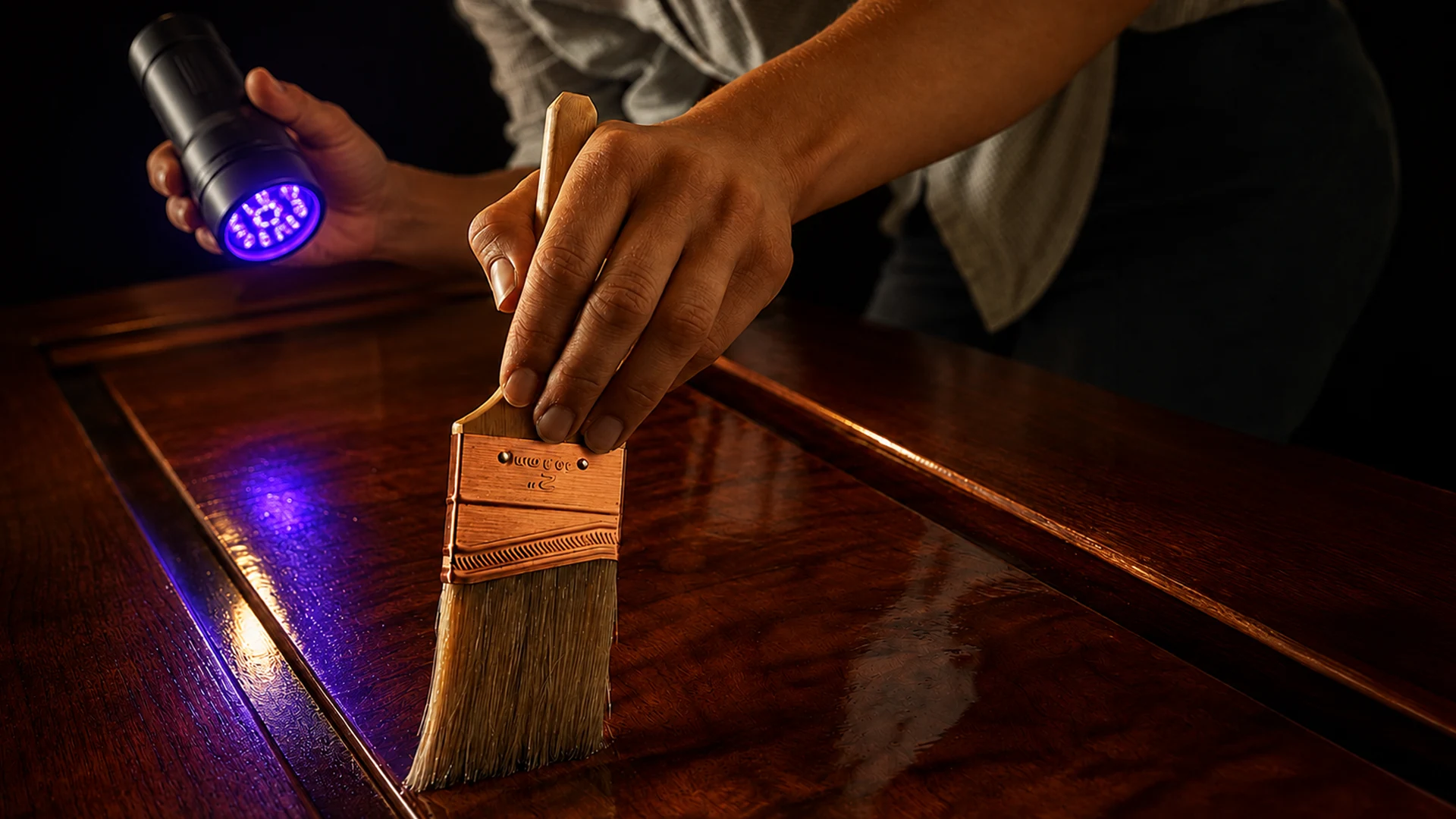
One of the most important layers is a wood sealer. A wood sealer prepares the wood before the final finish goes on, helps control how the surface absorbs the coating and gives the topcoat a more consistent base to work with.
But you can’t choose a sealer without giving it some thought. The wood, the finish you want and where the furniture will be used need to be considered.
Let’s take a closer look at a wood sealer, without making the finishing process more complicated than it needs to be
What Is a Wood Sealer?
A sealer is a foundational layer in a wood finish.
Wood is naturally porous. But it can absorb a coating differently in different areas. Open pores may soak up more product, while denser areas absorb less. This eventually leads to an uneven-looking finish.
A wood sealer can reduce and control this unpredictable absorption by sealing or plugging the surface pores and providing a firmer base for subsequent coats.
This can also make the surface easier to sand and leads to a smoother final finish.
Why Is a Wood Sealer Important?
A sealer may be hidden beneath the final finish, but it can have a noticeable effect on the finished surface.
1. It Helps Prevent Uneven Absorption:
Bare wood can absorb a coating unevenly, particularly when the surface has open pores or varying densities. A suitable sealer helps create a more consistent base.
2. It Helps You Get a Smoother Finish:
Wood grain and open pores can make it difficult to achieve that smooth, refined surface you expect from finished furniture. A good sealer can fill the pores and small surface imperfections before your final coats, enabling you to achieve a smooth surface.
3. Better Topcoat Application:
A prepared surface gives the subsequent coating a more consistent base. This can contribute to better adhesion and a more uniform appearance when the complete system is applied correctly.
4. It Influences the Final Look:
The filler is not only there for functional reasons. It influences the appearance of the grain, the colour, transparency, and gloss of the top coat.
This is most of all helpful if you have a clear finish in which you want the natural texture of the wood to come through.
What Happens If You Skip the Wood Sealer?
Not every finishing system would use a wood sealer. It is advisable to verify if your finishing system is in fact self-sealing before applying an additional product onto the surface.
But if the system does require a sealer and you skip it, you may end up with uneven absorption, a rougher surface or an inconsistent final finish.
Porous substrates such as MDF edges and plywood may also require specific preparation before finishing.
A manufacturer’s recommended system determines whether a separate wood sealer is required.
How to Choose the Right Wood Sealer
Choosing a wood sealer is quite easy after you take the entire finishing process into account, rather than just the sealer. Begin by asking four simple questions: What are you finishing? Where will it be installed? What finish do you desire? And what topcoat will be applied on top?
For interior furniture, options such as NC, melamine, PU, acrylic and polyester are available across different finishing systems. The right choice depends on the finish you want and the requirements of the application.
We also need to take into account of the materials; for example, MDF, ply, or veneer all absorb coatings differently on their surfaces and edges.
The location matters just as much. Interior furniture and outdoor doors face different conditions, so exterior applications should use a finishing system intended for outdoor exposure.
The most important rule is to choose the sealer and topcoat as a complete finishing system. Check the manufacturer’s recommendations for compatibility, surface preparation and application. This helps you avoid choosing a sealer that looks suitable on paper but does not work properly with the finish you plan to apply.
Why Your Sealer and Topcoat Must Match
A wood finish works as a system. The sealer underneath needs to be compatible with the topcoat going over it.
For example, Woodver’s PU Clear Sealer is part of its PU finishing system, which includes compatible PU clear topcoats. Similarly, other coating chemistries have their own recommended finishing systems.
Mixing products from different systems without checking compatibility can lead to problems with adhesion, drying, curing or the appearance of the finished surface.
Common Wood Sealer Mistakes to Avoid
1. Choosing the sealer without considering the topcoat: A sealer and topcoat should work as a compatible finishing system. Choosing them separately can affect adhesion, appearance and durability.
2. Applying the next coat too soon: Time to dry/cure depends on the product. Applying the next layer too soon can adversely influence the final appearance; adhere to the guidelines provided by the manufacturer for recoat time.
3. Skipping surface preparation: You need to prepare the surface properly before applying a wood sealer. Dust, uneven sanding and surface contamination can all show through the finished coating.
4. Assuming every wood needs the same sealer: Just because a product works fine with one application does not necessarily mean that it will work great in another situation. You must take into consideration the kind of wood, colour, indoor or outdoor use and the desired finish.
How The Right Wood Sealer Sets the Foundation for a Better Finish
The final appearance of furniture is often judged by its topcoat. What most people fail to realize however, is just how much these underlying layers influence how this topcoat looks. A proper sealer helps regulate absorption as well as lay the groundwork for creating a more consistent finish.
The ultimate outcome depends on your wood, your application, the environment and the topcoat you intend to use.
Explore Woodver’s range of wood sealers and find the finishing system that fits your project.