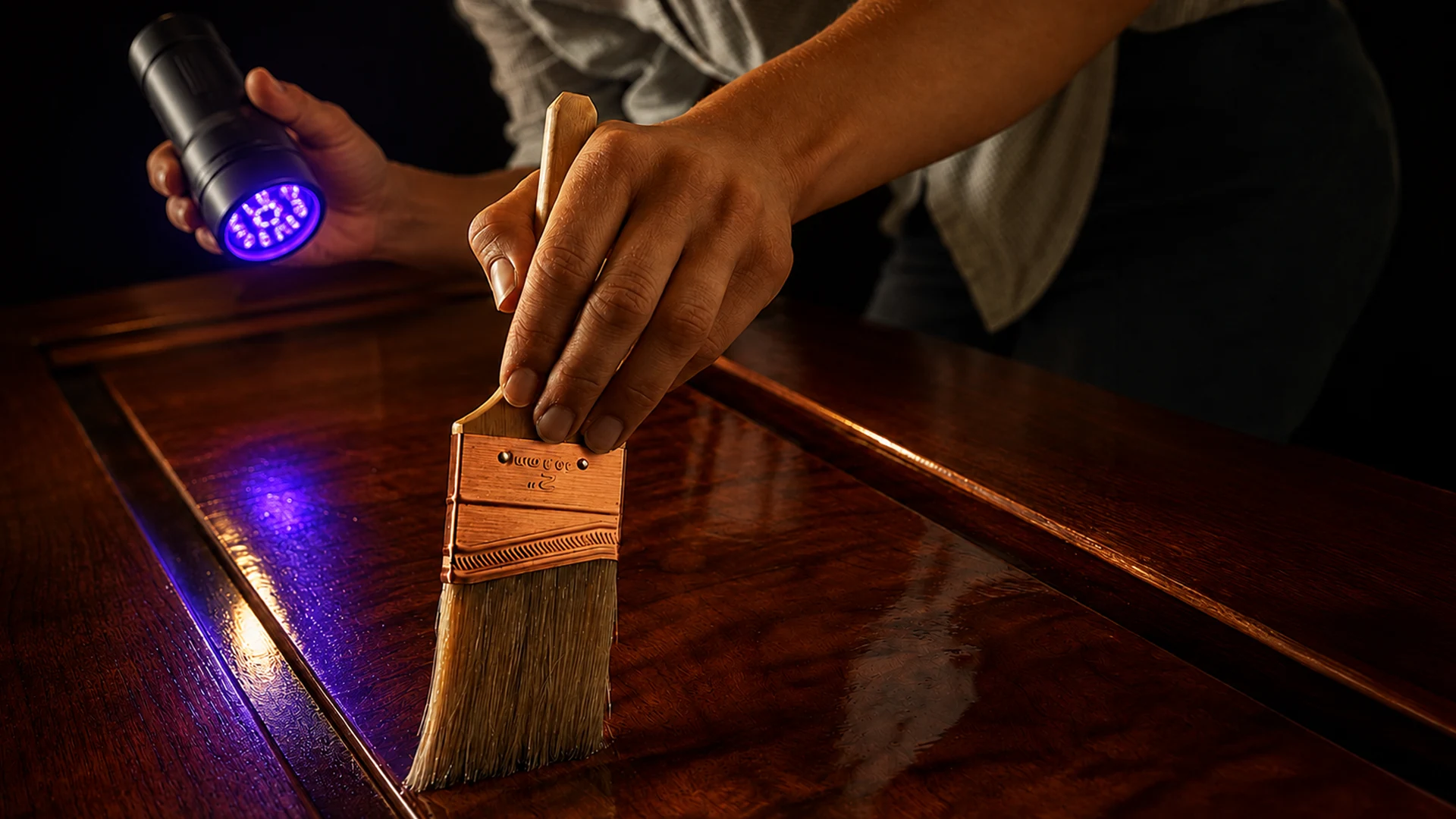

Have you got a crack, dent, or hole in a piece of wood? Your first instinct is often to cover it up with a beautiful finish. But you will find out that it only brings more attention to it.
You need the right products to cover up these flaws properly, like wood filler and wood putty. They are both used to repair imperfections, but they are both meant for different stages of the finishing process.
Wood filler hardens as it dries and is normally used before finishing. Meanwhile, Wood putty remains flexible and is generally used once your wood is already finished.
Neither is better than the other. The right choice depends on what you’re repairing and whether the wood is finished or unfinished. Let’s take a closer look at these products:
What Is a Wood Filler?
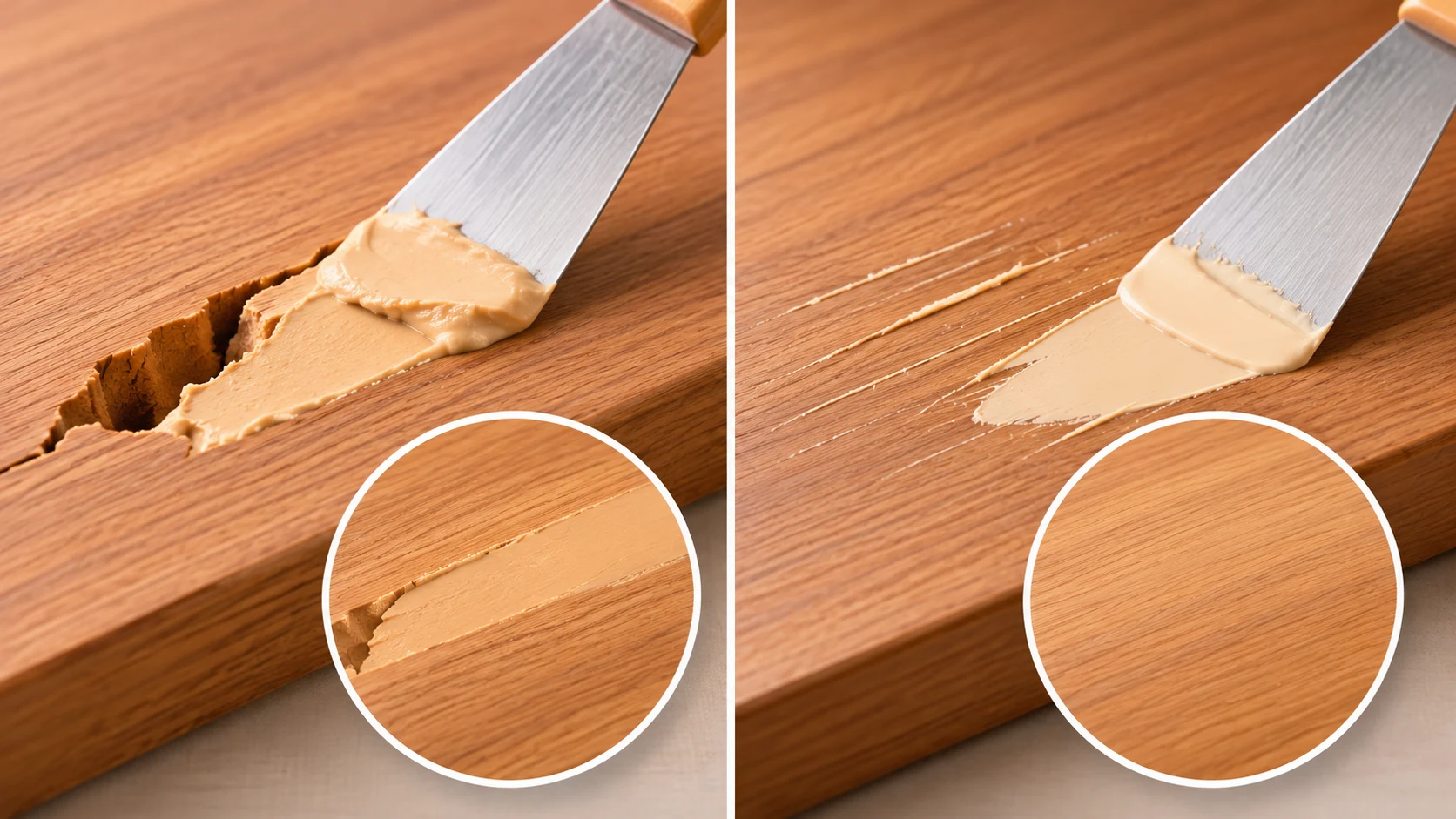
A wood filler is like a repair material for damaged wood. You simply use it to fill a hole, crack, dent, or gouge. After that, just allow the filler to completely dry before sanding off the entire surface.
Once sanded, you can continue with the finishing process and paint or stain the repaired area, along with the rest of the wood.
There are different kinds of wood fillers out there ranging from water-based fillers to solvent-based ones. Some are intended solely for Indoor Use while others allow Outdoor applications.
What wood filler does well:
- Hardens enough to be sanded smooth
- Fills deeper holes, cracks, dents, and gouges
- Can generally be painted or stained after preparation
- Works well on unfinished wood
What to keep in mind while using wood filler:
- It needs drying time before sanding
- Deep repairs may need more than one layer
- The filled area may absorb stain differently from the surrounding wood
What Is Wood Putty?
Wood putty is more like a touch-up material for finished wood. You use it to cover up little imperfections, like nail holes or small dents or scratches once you’ve painted, stained or finished your piece of wood.
Unlike wood filler, putty usually doesn’t dry completely hard. It stays flexible, which is useful because finished wood can expand and contract over time. But that also means you generally can’t sand it smooth or stain it like you would wood filler. It is meant more for small cosmetic touch-ups than for rebuilding damaged areas.
For example, if a finished cabinet has a small nail hole that you want to hide, putty can be applied without having to sand back the surrounding finish.
Wood Filler vs Wood Putty: Which One Should You Use?
The easiest way to decide between wood filler and wood putty is to consider the condition of the wood and what you want to fix. Let’s understand this with some practical examples:
- Staining raw wood: Use a wood filler, preferably one designed to be stained.
- Painting furniture or doors: fill them with a wood filler, let it cure and then sand off all the rough parts before applying paint.
- Small nail holes on a finished cabinet or floor: For these kinds of touch-ups, use wood putty
- Outdoor repairs: A wood filler designed for outdoor conditions.
- Large cracks or missing pieces: Apply multiple layers instead of a single, thick application.
Common Mistakes to Avoid While Using Wood Filler and Wood Putty
Even the right product can give you a poor result if it’s used incorrectly. These are some common mistakes to watch out for:
- Using putty before staining: Putty can leave a visible patch because it doesn’t absorb stain like unfinished wood.
- Skipping sanding: A small raised area can become surprisingly obvious once the finish goes on.
- Choosing a filler colour without testing: The colour can look different after drying and finishing, so test it before committing to a large repair.
- Applying too much filler at once: A very thick application needs more time for the filler to dry, and it could also be prone to cracking or shrinking later. Deeper repairs are better built up gradually.
- Sanding before the filler is fully dry: This can pull the filler out of the hole or leave an uneven surface.
- Leaving the filler below the surface: If the filler shrinks after drying, the repaired area can end up slightly sunken. Applying it a little above the surface gives you enough material to sand flush.
Choosing Between Wood Filler and Wood Putty
While Wood filler and wood putty might look like interchangeable products, these two products serve completely different purposes. Wood fillers are used for repairing your unfinished wood before you start sanding and finishing.
Meanwhile, putty is used for small touch-ups on finished surfaces.
Once you know what you’re repairing and what you plan to do next, choosing between the two becomes much easier.
Explore Woodver’s range of wood fillers and finishing products to find the right solution for your project.